You searched for IT consulting on Long Island, which usually means one of two things is happening.
Either you have a specific project on your plate and need someone with a particular skill set to come in, solve the problem, and move on.
Or you have a broader feeling that your business needs better technology guidance, and “IT consulting” was simply the phrase that came to mind when you searched for help.

Those are two very different situations. And they usually require two very different types of relationships.
Most articles on this topic try to convince you that whatever the author sells is the answer. We are going to take a different approach. We are going to explain what IT consulting actually is, what a Dedicated Technology Advisor actually is, and where each one genuinely makes sense for businesses across Nassau and Suffolk County.
Sometimes that means we are not the right fit for the situation. And honestly, that is okay.
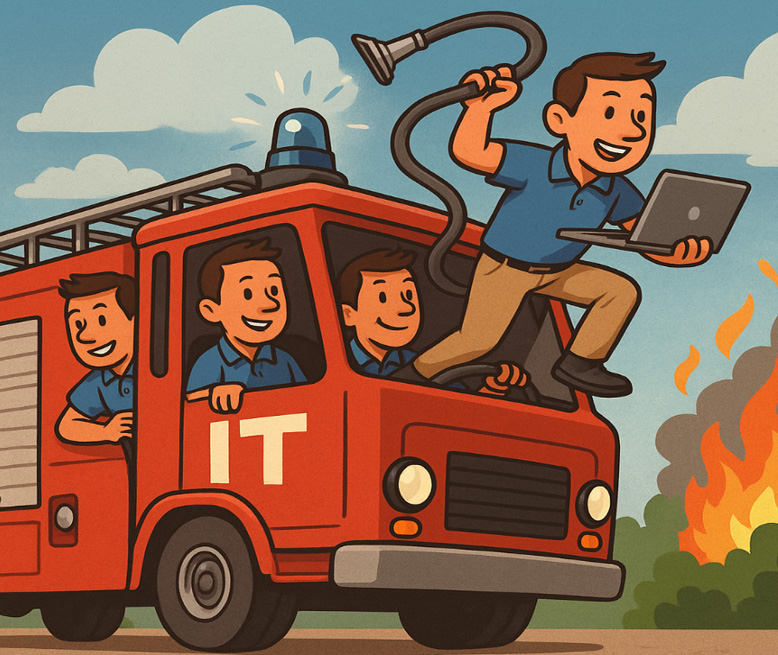
An IT consultant is typically brought in to solve a specific problem.
The work has a defined scope, a defined timeline, and a defined outcome. Once the engagement is complete, the consultant moves on to the next client.
A few common examples:
Consulting works extremely well when the problem is clearly defined.
If you can explain what success looks like, put boundaries around the work, and know when the project is considered complete, a consultant is often exactly the right hire.
This is not a criticism of consulting. Good consultants provide real value. But the relationship is usually tied to a project, not the long-term evolution of the business itself.
That distinction matters more than most companies realize, especially for the kind of growing small and mid-sized businesses we see across Long Island.
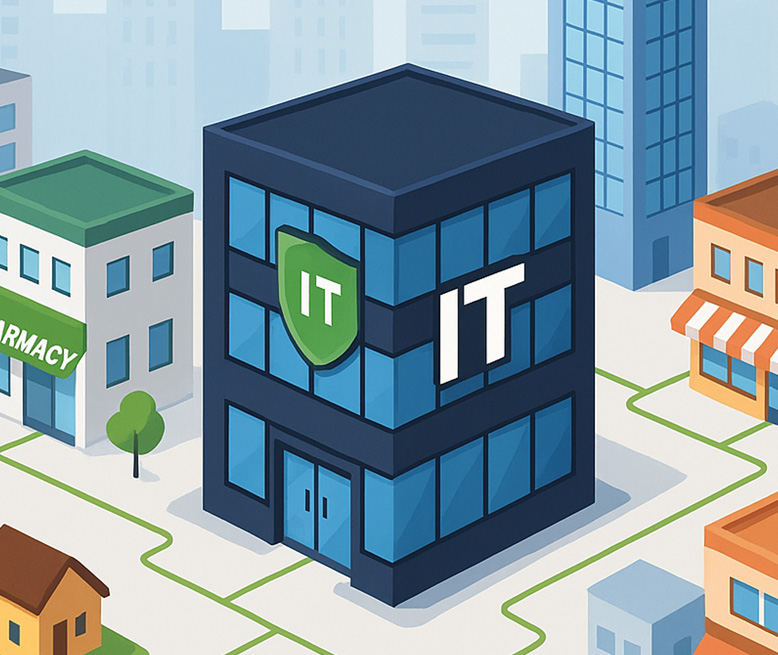
A Dedicated Technology Advisor is not hired for a single project.
They are hired to become part of the decision-making process of the business itself.
Their job is to understand your environment deeply over time. Your systems, your people, your goals, your budget, your pain points, your growth plans, and the history behind the decisions you have already made.
That context changes the quality of the guidance.
When your CFO asks whether it is time to replace aging infrastructure, your advisor already understands the environment. When a software vendor pitches a new platform, your advisor can tell you whether it actually fits your business specifically, not just whether the demo sounded impressive.
When you are deciding whether to hire internal IT staff, expand managed services, open a new office on Long Island, or standardize systems across the company, the advisor is already operating with years of accumulated context.
That is the real difference.
A consultant often starts from zero at the beginning of every engagement. An advisor does not.
The value is not just in expertise. It is in continuity.
The easiest way to think about it is this:
A consultant is usually hired for a defined outcome.
An advisor is hired for ongoing judgment.
The relationship is ongoing because technology decisions are ongoing. New vendors appear. Businesses grow. Risks change. Priorities shift. The advisor stays connected to all of it.
It is similar to the difference between hiring an attorney for one lawsuit versus having an attorney who already knows your business, your history, and how you operate.
Both models are valid. They simply solve different problems.
Sometimes consulting is absolutely the better fit.
If you have a single, well-defined initiative with a clear endpoint, bringing in a consultant is often the smartest and most efficient move.
That is especially true when:
In those situations, paying for long-term advisory may not make sense. You need focused expertise for a focused problem.
And there is nothing wrong with that. Long Island has a strong pool of independent IT consultants who do exactly this kind of project work very well.
Advisory becomes far more valuable when technology decisions are happening regularly instead of occasionally.
Most small and mid-sized businesses on Long Island do not have a CIO or CTO sitting internally guiding long-term technology strategy. Whether you are based in the Long Island Innovation Park at Hauppauge, along the Route 110 corridor in Melville, or running operations out of Garden City or Mineola, decisions tend to happen reactively, one at a time, often without continuity between them.
That is where advisory changes things.
If your business is growing, adding employees, opening locations, adopting new platforms, dealing with compliance requirements, or simply trying to become more operationally mature, technology questions stop being isolated projects.
They become ongoing business decisions.
And at a certain point, repeatedly hiring consultants who need to relearn your business every time becomes inefficient. This is one of the most common reasons Long Island businesses end up changing their IT company in the first place.
An advisor already knows:
That accumulated understanding is where a huge amount of value comes from.
Not because the advisor is magically smarter than a consultant, but because context compounds over time.
If you are still unsure which direction makes more sense, ask yourself these four questions honestly.
1. Can you clearly describe what “done” looks like?
If yes, you are probably looking for consulting.
If the problem feels broader, ongoing, or difficult to define cleanly, you are probably looking for advisory.
2. How often do technology decisions come up?
If the answer is once every year or two, consulting may be enough.
If the answer is monthly or weekly, having someone continually involved usually creates far better outcomes.
3. Do you already have strong internal IT leadership?
If you already have an experienced internal technology leader, consultants can fill targeted gaps when needed.
If you do not, advisory often fills that leadership role.
4. Are you looking for a transaction or a relationship?
Both are valid. But they are not the same thing.
One is centered around completing a project.
The other is centered around long-term alignment and continuity. This is also one of the core questions to think through when choosing a managed service provider on Long Island in the first place.
At Flexible IT, we operate much closer to the advisor model than the traditional consulting model.
Our Long Island clients work with Dedicated Technology Advisors as part of an ongoing managed services relationship. The strategic conversations, the project planning, the vendor evaluations, the budgeting discussions, and the day-to-day operational guidance all live under the same roof.
What we do not typically do is one-off project consulting outside of a broader relationship.
If you have a single isolated project and simply need someone to execute it, there are good consultants on Long Island who specialize in exactly that kind of work.
Where we tend to be the right fit is when businesses across Nassau and Suffolk want technology guidance that does not reset every time a new project appears.
Because technology decisions rarely happen in isolation. They build on top of each other over time.
And in our experience, businesses usually get the best outcomes when the people helping make those decisions already understand the bigger picture before the conversation even starts.
If that sounds like the kind of relationship you are looking for, we are happy to have a conversation. And if it is not, we will tell you that too.
Explore more insights from our IT experts.