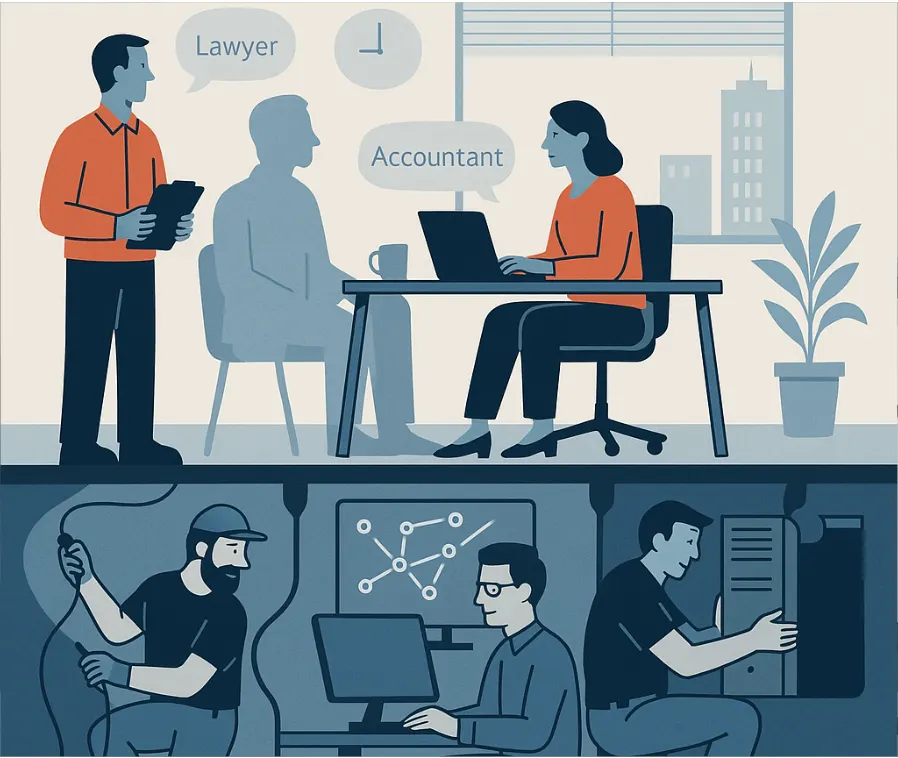
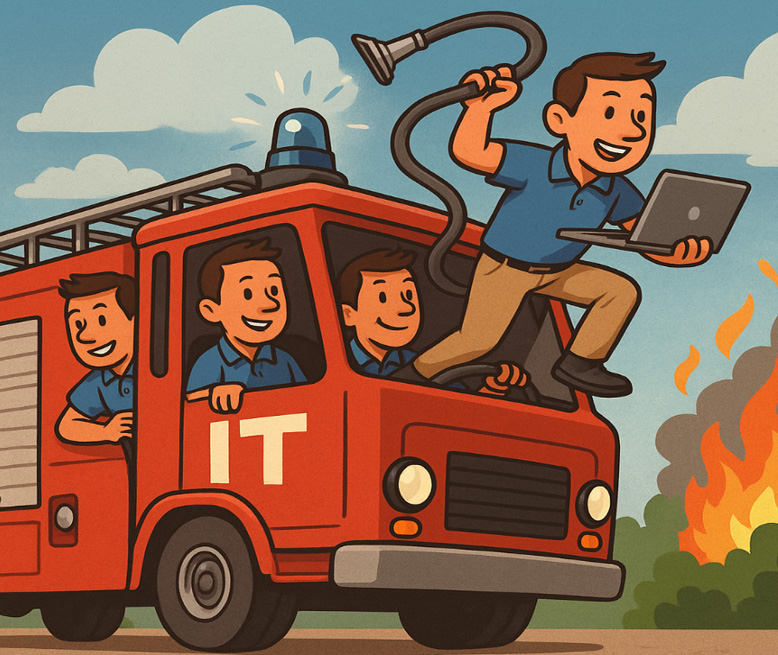
If you ask most business owners what a Managed Services Provider (MSP) is, many would struggle to give you a clear answer. Truthfully, if you asked most people in general, you would likely get the same reaction.
That confusion is not really anyone’s fault. It is largely the result of an industry term that has never translated well outside the technology world.
The phrase Managed Services Provider may be common within IT circles, but outside of them, it often creates more questions than answers. It sounds technical, broad, and disconnected from the day-to-day business challenges companies are actually trying to solve.
Even within the industry, the term can mean different things depending on who you ask. Some hear IT support. Others think cybersecurity. Others think outsourced IT management. Others think software tools. That lack of clarity is exactly why many businesses are unsure what an MSP truly does.
One thing I have noticed when speaking with business owners is how difficult it can be to explain what an MSP does in one quick sentence.
If I say Managed Services Provider, it often means very little to someone hearing it for the first time.
If I say IT support, that is easier to understand, but it only captures a fraction of the picture.
If I say technology company, that is so broad it could mean almost anything.
That is the real challenge.
The work itself is valuable. The name does not always communicate the value clearly.
The simplest answer is this:
We help Long Island businesses achieve their technology goals effortlessly.
That means solving problems when they arise, preventing issues before they happen, protecting systems, improving efficiency, and giving leadership confidence that technology is being properly handled.
Flexible IT has been serving Long Island since 1984. All of our work lives under one umbrella called Effortless IT, which brings together five core services:
Support Should Feel Different
One thing that sets us apart from a typical MSP is how support actually feels.
Tickets belong at the deli counter, not in IT.
When something breaks, clients should not feel trapped in a black hole of tickets, transfers, and waiting. They should be able to reach a real person who owns the issue and helps drive it to resolution.
Process, accountability, and trust matter to us. That mindset is one reason we pursued and achieved SOC 2 Type II attestation.
It is also one reason many of our clients stay with us for years.
Some businesses call when things are broken.
Others call when they are growing.
Others call when they realize their current setup has hit a ceiling.
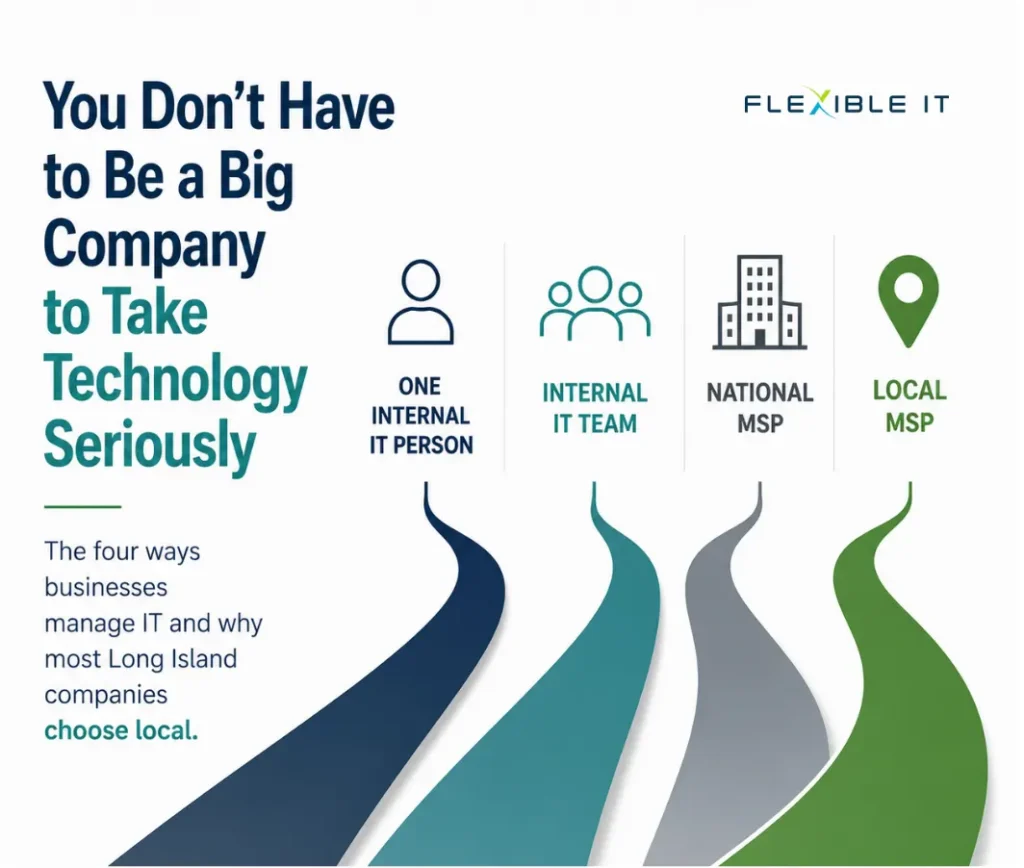
Over time, we have found that most businesses fall into one of four common stages.
This is where many small and growing businesses begin.
Technology gets handled by whoever is available. The owner resets passwords. An office manager orders laptops. A tech-comfortable employee becomes the unofficial IT person.
It works until it doesn’t.
As the company grows, technology becomes more important and more complex. Small inefficiencies become larger problems.
We help businesses move from improvised IT to professional IT.
The next stage is hiring an internal IT person.
This often makes sense at first. It feels like having someone in-house means control and faster help.
But one person can only cover so much.
They may be handling user support, vendors, cybersecurity, purchases, onboarding, networks, emergencies, and long-term planning all at once.
That is a heavy ask for one seat.
Many businesses in this stage realize they do not need one IT person.
They need an entire IT organization.
If you are trying to figure out whether an internal hire or an MSP makes more sense for your business, you can run the numbers with our MSP vs. Internal IT Calculator and see the real cost comparison.
That is often when they turn to us.
Some businesses build a full internal IT department.
At that point, technology has clearly become mission-critical.
Many businesses build an IT department only to realize they also inherited the burden of managing one.
Internal departments come with real costs: salaries, benefits, management overhead, turnover risk, silos, and the challenge of keeping expertise current across many areas.
For some organizations, that model still makes sense.
For many others, it becomes expensive, complex, and harder to scale than expected.
That is when leadership begins asking a smarter question:
Do we need to manage an IT department, or would we be better served by partnering with a company whose entire business is IT?
The fourth stage is one people do not always talk about.
The business already has a managed services provider, but it is not working.
Maybe response times have slipped. Maybe the same issues keep coming back. Maybe the relationship feels transactional. Maybe the provider understands technology, but not the business.
This is one of the most common reasons new clients reach out to us.
Not because they do not believe in the MSP model, but because they experienced a version of it that fell short.
Choosing the right IT partner is one of the most important decisions a business makes, and it is worth getting right the second time.

What works at 10 employees often breaks at 25.
What works with one internal IT person may struggle at 50.
What works with a department may become bloated or inefficient over time.
What works with one MSP may stop working when the business outgrows them.
Technology needs evolve as businesses grow. The support model should evolve with it.
We work across a wide range of industries on Long Island, and we see these transitions happen every year.
We believe businesses should be focused on running their company, not running an IT department.
Our role is to bring the depth of a full technology organization without the burden of building one internally.
That means broader expertise, stronger systems, proactive management, predictable costs, and a partner whose job is to keep your business moving.
The term MSP may be imperfect.
The value is not.
Better systems. Less downtime. Stronger security. More confidence.
That is what great IT is supposed to deliver.
Explore more insights from our IT experts.