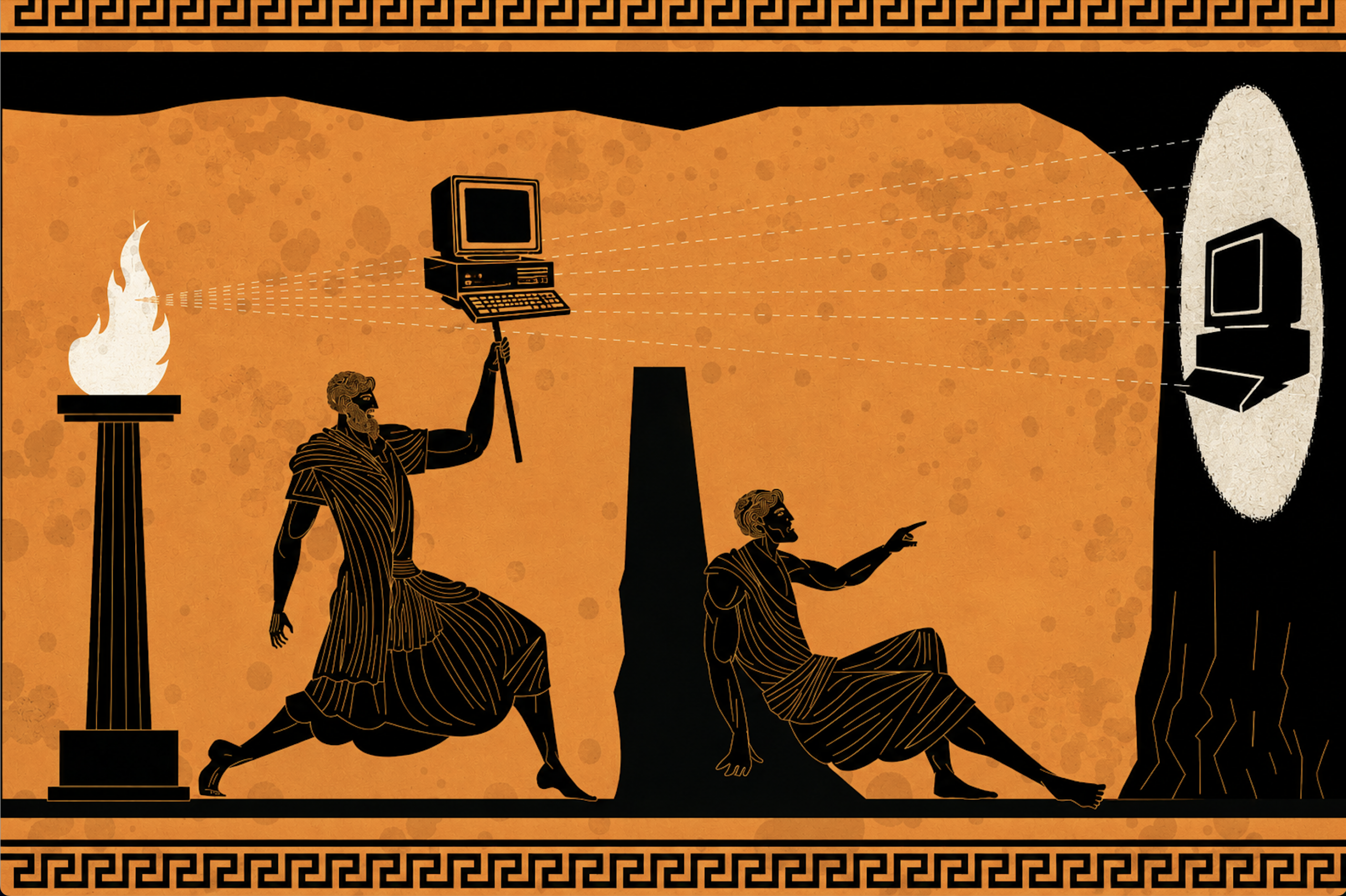
The wrong IT company never has to lie to you. It only has to convince you that the shadows on the wall are all there is.
Over 2,300 years ago, Plato described a group of prisoners chained inside a cave since birth. They cannot turn their heads. All they can see is the wall in front of them.
Behind them, a fire burns. Between the fire and the prisoners, people carry objects that cast shadows across the wall.
The prisoners believe the shadows are reality. How could they think otherwise? They have never seen anything else.
Now the uncomfortable part.
For the last ten, fifteen, or twenty years, your IT company has been the lens through which you have seen technology. They have told you what matters and what does not. Whether AI is practical. Whether your cybersecurity is good enough. Whether compliance applies to your business. Whether automation is worth the money.
You trust them, because they are the experts.
But what if the reality they have shown you is not reality at all? What if it is just the shadows they are capable of casting?
Some purchases evaluate themselves. You know whether the steak was good. You know whether the hotel room was clean. You know whether the shirt fits.
Technology for a business does not work that way.
Economists call this a credence good: something the customer lacks the expertise to judge, even after they have received it. Medicine, auto repair, legal work, and IT all live in this category.
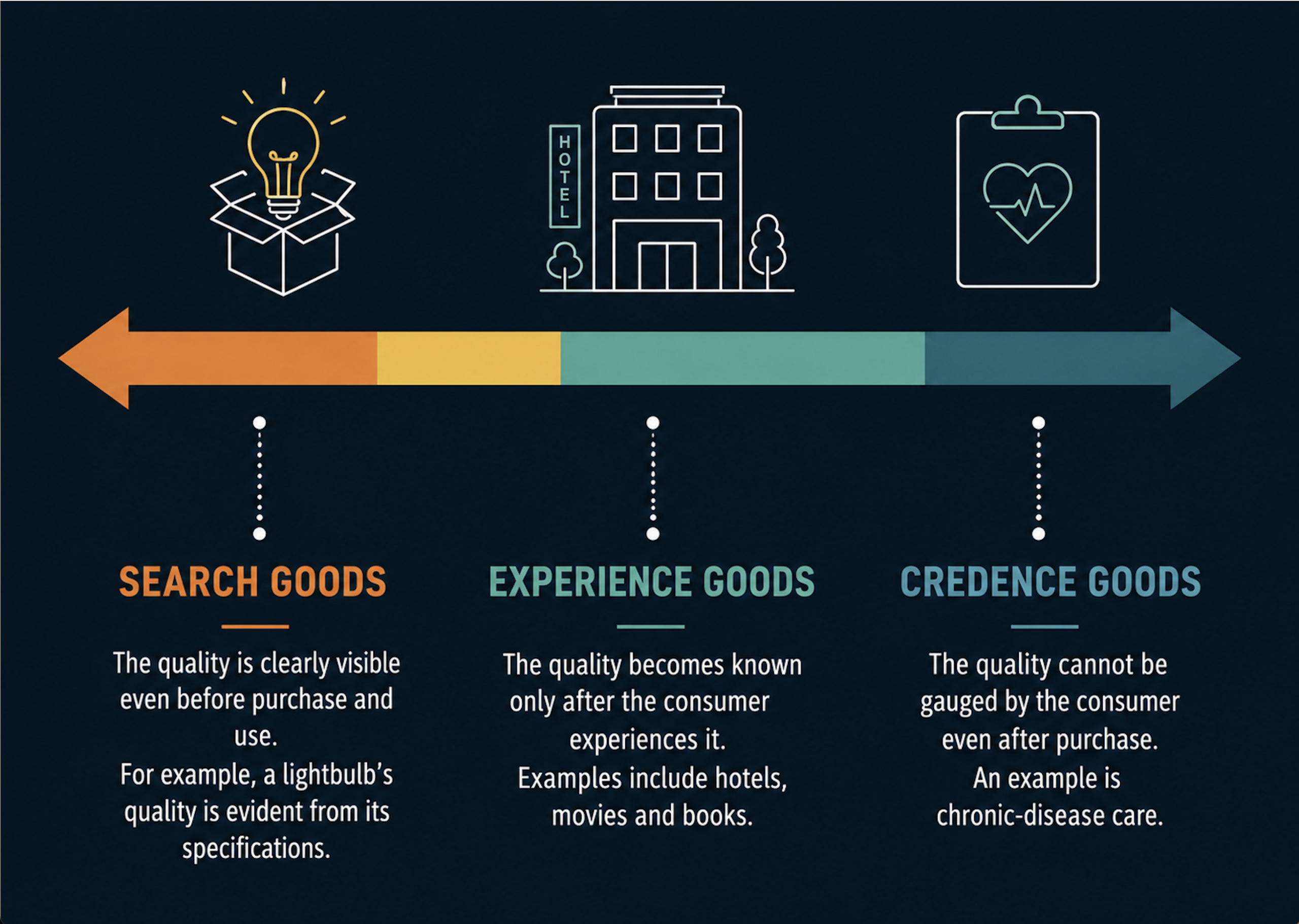
If the computers turn on, the email works, and the help desk answers the phone, everything appears fine. But appearance is not the same as excellence.
So you rely on the person you are paying to tell you what is important. That is the whole problem in one sentence, and it is why choosing a managed service provider is harder than almost any other vendor decision a business makes.
If your IT company has never shown you AI doing real work inside your business, you assume AI is overhyped.
If they have never walked you through a modern security framework, you assume antivirus and a firewall are enough.
If they have never raised compliance, you assume it does not apply to you.
If they have never automated anything, you assume the manual work is simply how business runs.
None of those feel like assumptions. They feel like knowledge. That is what makes them expensive.
Most business owners have heard some version of these.
"You don't need that."
"That's just marketing hype."
"AI isn't ready yet."
"Your business is too small for that."
"Nobody's asking for it."
"We've always done it this way."
Any of those might be completely true. Or they might be the outer limit of what your IT company understands. Those are very different situations, and from where you are sitting they sound identical.
We will be honest: every IT company, including ours, has said some version of "you don't need that" about something a client later did need. The difference is whether it ever gets revisited.
Here is the part of Plato's story that should bother you most. The prisoners did not feel trapped. They defended the cave, because it was the only reality they had ever known.
Business owners do the same thing, and the arguments are always the same.
"We've been with them twenty years."
"They've always taken care of us."
"We've never had a major problem."
All of that can be true and still not answer the only question that matters. Compared to what?
Compared to a partner building automation into client operations every month? One preparing you for compliance requirements before an auditor or insurance carrier asks? One that treats security as a competitive advantage rather than a box to check at renewal?
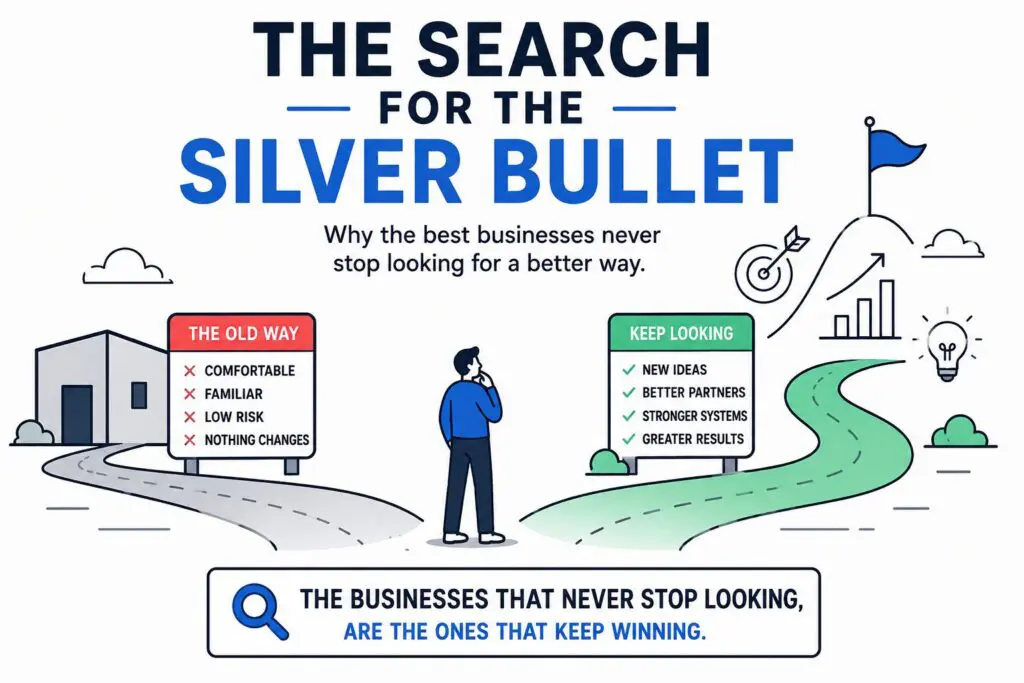
And here is the difficult part: you are never going to get a clean, apples-to-apples comparison. That is what credence good means. Nobody hands you a scorecard. The results that separate a good technology partner from a mediocre one accumulate quietly over years, which is exactly why they are so easy to miss. It is also why so many owners keep searching for a silver bullet instead of a different vantage point.
You cannot evaluate the technical quality of the work. Stop trying.
But you can evaluate whether anyone has been expanding your view. That is observable, it takes no technical knowledge, and it is a reasonable proxy for everything you cannot see.
Five questions:
Notice what these have in common. Not one of them asks you to judge their technical work. They ask whether anyone has been turning your head.
In Plato's story, when the prisoner escapes, the sunlight hurts his eyes. Discovering there were better ways to operate the whole time is uncomfortable, and most people would rather not find out.

The wrong IT company never has to lie to you. They do not have to intentionally hold your business back.
They only have to convince you that the shadows on the wall are all there is.
Which is not a hard sell, because the shadows are all they have ever seen either. They are not performing. They believe it too. That is what makes it so easy to accept.
If your honest answer to those five questions is "not really," you may not have a technology problem. You may have a perspective problem.
That is a much easier thing to fix. If you want a second point of reference, start a conversation with our team and we will walk you through what your five answers should have looked like.