For most of business history, ideas were cheap. Building them was not.
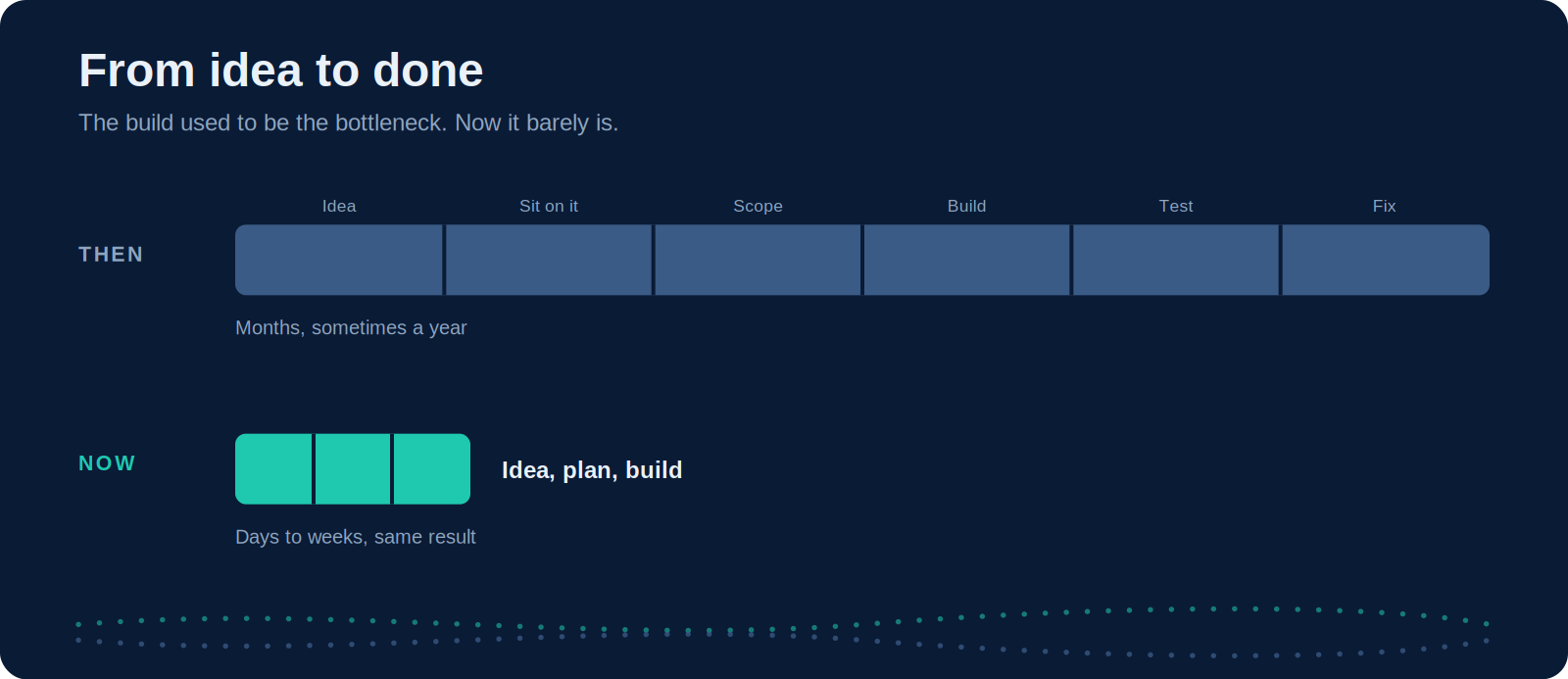
A company would have an idea, spend weeks discussing it, then months finding time to build it, and by the time it launched the opportunity had often changed.
The bottleneck was never imagination. It was execution.
That gap is closing fast.
It used to be cut in half if you were lucky. That is not what is happening now.
Now the time from idea, to plan, to working thing is a fraction of what it was. Projects that once filled an entire quarter now get scoped, built, and tested in a week. A one-off tool nobody had time for gets made in an afternoon. The stuff that lived on the back burner for years, the “we should really do that someday” list, is suddenly getting done.
Not because the ideas got better. Because the build got faster.
That flips how you decide. When building was slow and expensive, you had to be right before you started, so ideas sat in meetings waiting for someone to be sure. Now the cost of being wrong has collapsed. Instead of debating an idea for three weeks, you can spend three days building it and let reality answer the question.
The biggest change is not that existing projects get done faster. It is that entirely new categories of projects suddenly become worth doing.
Five years ago, nobody was going to spend $40,000 building an internal tool that saved one employee thirty minutes a day. The math did not work. Today that same tool might cost a few thousand dollars, or less. Thousands of ideas that never cleared the ROI hurdle suddenly clear it.
So businesses that lean into AI do not just move faster. They end up doing things their competitors never even attempt.
Speed is only useful if you can handle it.
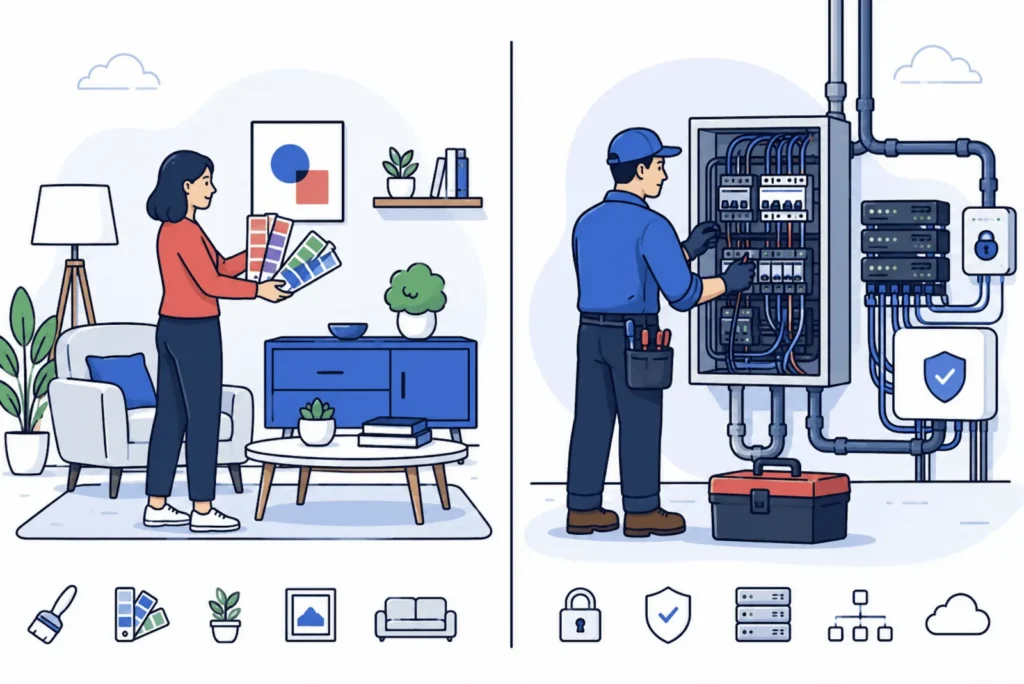
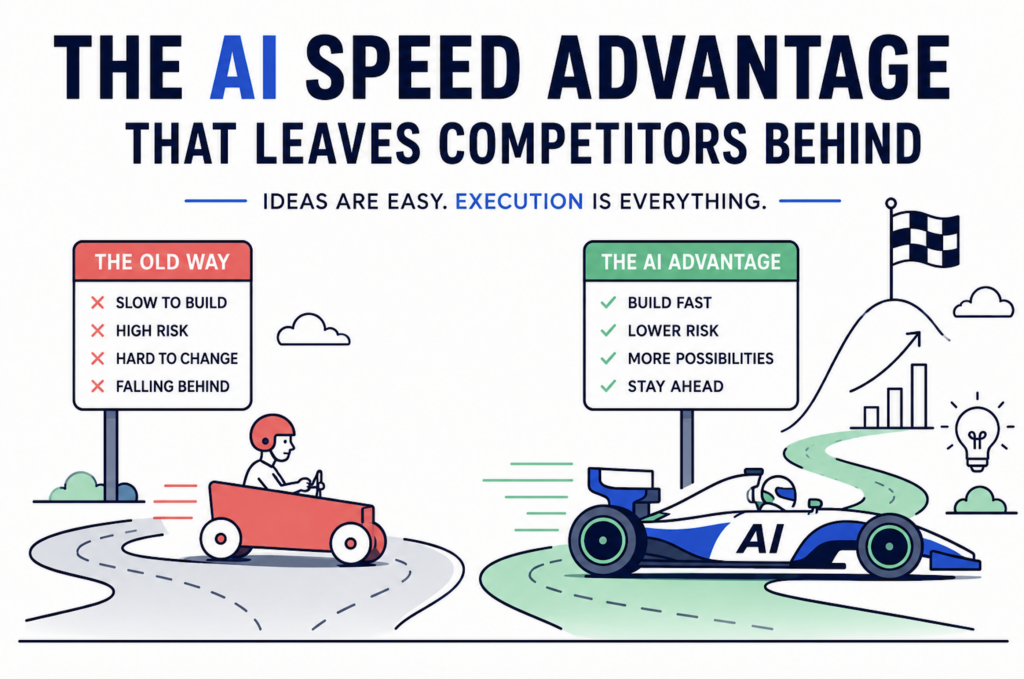
A soap box car and an F1 car both have four wheels and a driver. The difference is everything underneath. Give a soap box car an F1 engine and it does not win the race. It falls apart on the first corner.
AI is like handing every company an F1 engine. The engine is not the hard part anymore. Everyone has one now. The hard part is the chassis. The foundation. The structure that lets you actually put the power down without the whole thing shaking apart.
If your data is a mess, your systems are held together with tape, and nobody knows where anything lives, more speed just gets you to the wall faster. The same goes for security. Bolt AI onto weak defenses and you have built a faster way to get breached. That is why choosing the right cybersecurity partner matters more now, not less. You do not want to be a soap box car with a race engine bolted on.
AI does not fix organizational problems. It exposes them.
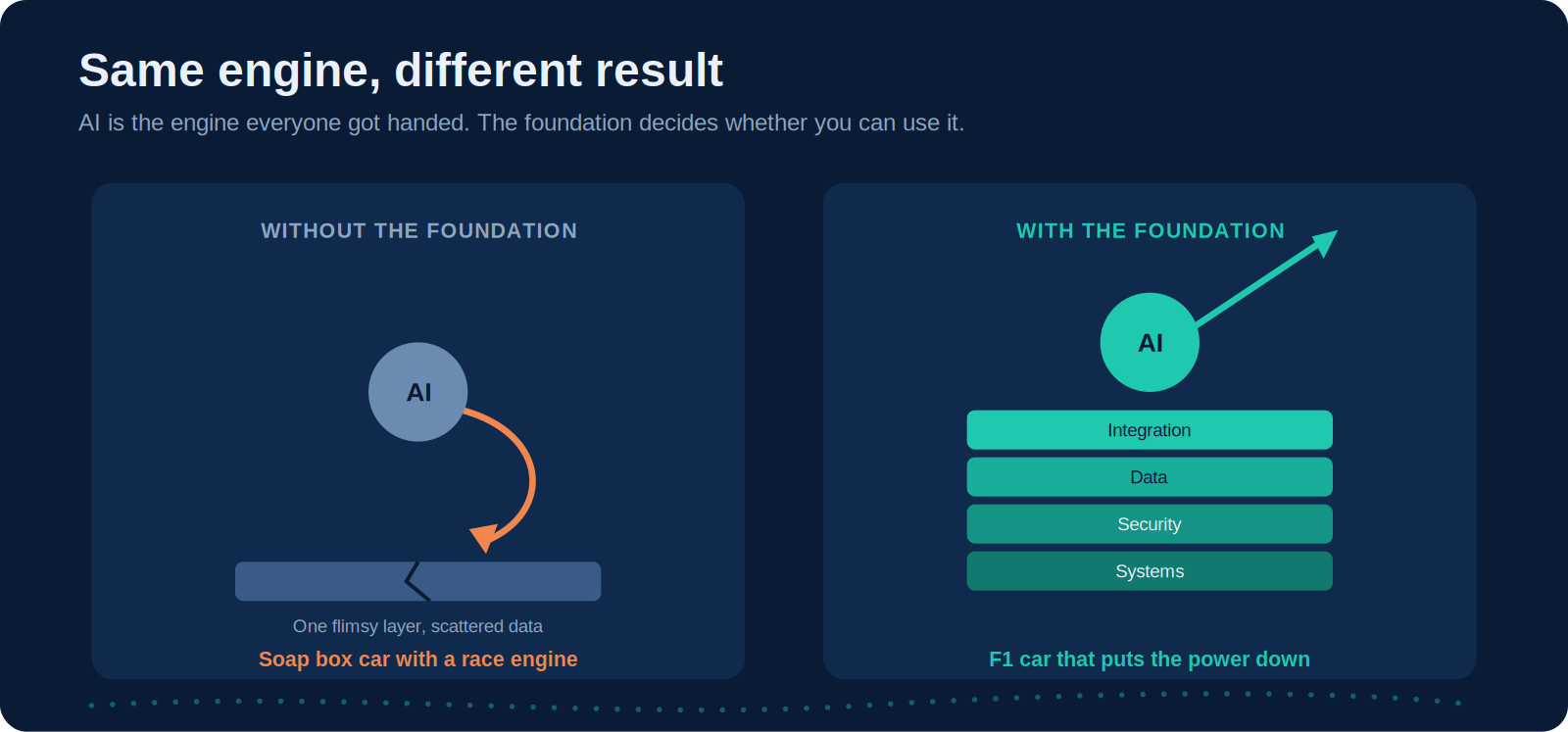
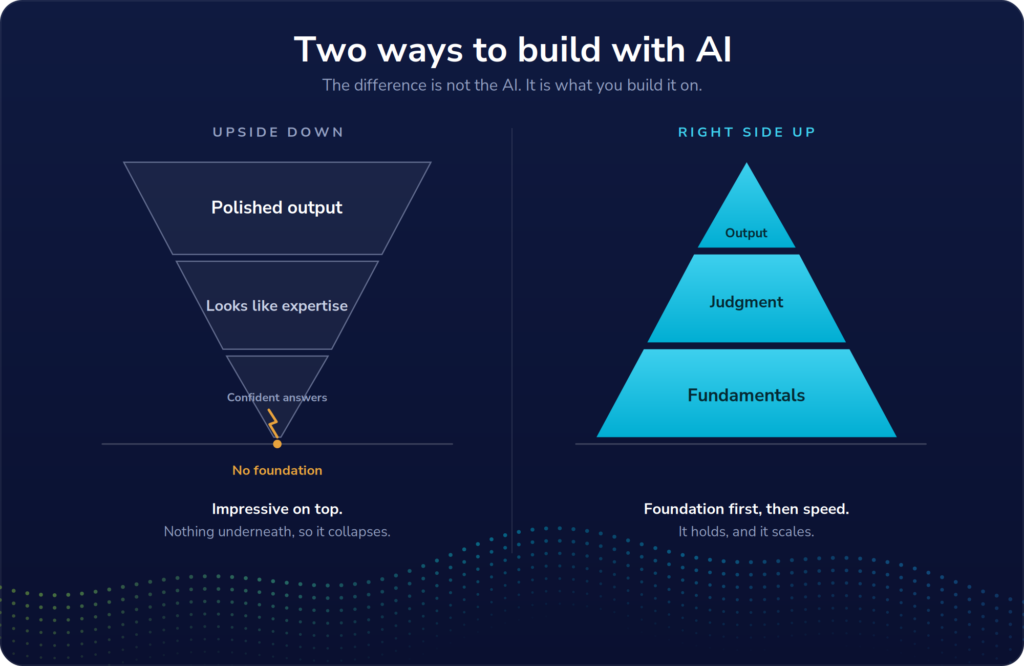
We wrote before about the upside-down pyramid of AI, and this is the same idea seen from a different angle. The foundation is what carries the weight. Get the structure right and everything you build on top of it moves faster and holds together.
When the foundation is solid, AI does not turn you into a slightly faster version of yourself. It turns you from a soap box car into an F1 car. The idea to done gap does not just shrink. It nearly disappears, and the things you build actually last.
That is the whole game right now. The companies pulling ahead are not the ones with the best ideas. Everyone has good ideas. They are the ones who built the foundation first, so when the speed showed up, they were ready to use it.
Here is the part that should worry someone. The only question is which side of it you are on.
The real advantage is not finishing one project faster. It is finishing every project faster. Each one you ship frees up time and gives you something to build the next one on. So the next project is faster than the last. The speed does not stay flat. It builds on itself.
Now picture a competitor who never built the foundation. They do one project the slow way. Then the next one the slow way. Their pace is a straight line. Yours is a curve that keeps bending up.
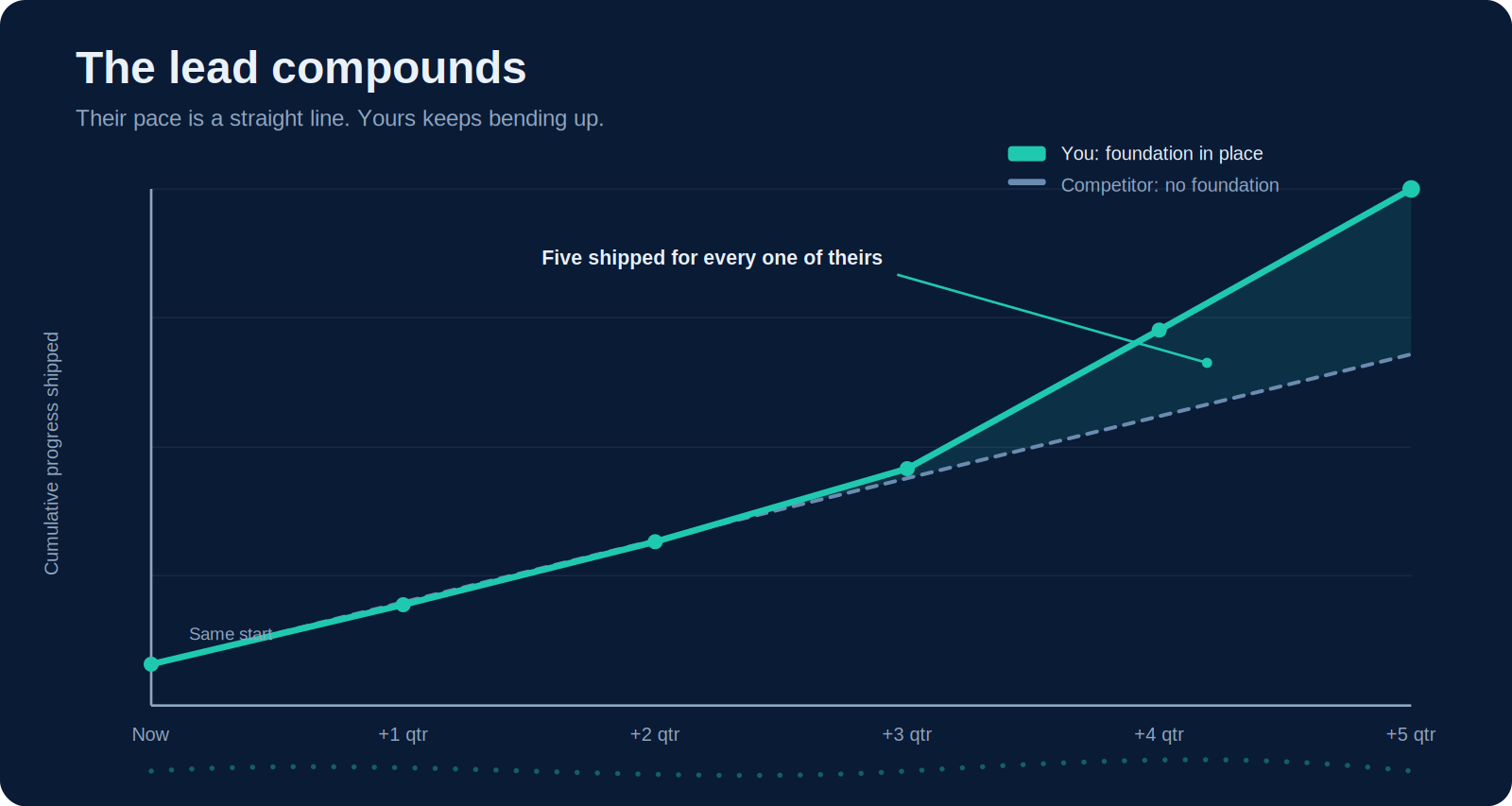
For a quarter or two you might look about even. Then the gap opens. By the time they copy the thing you shipped in the spring, you have shipped five more and moved on. They are not a little behind. They are running a different race.
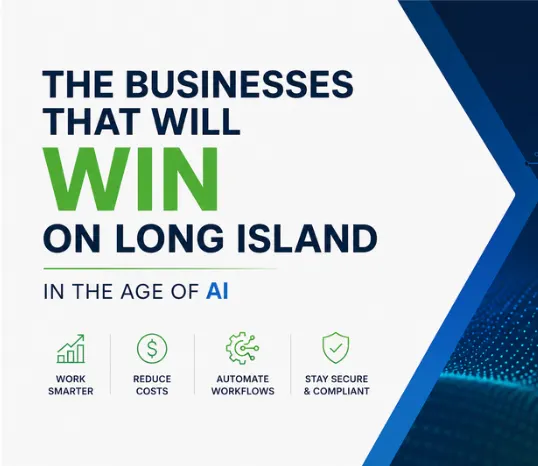
This is what we meant when we said the businesses that will win on Long Island in the age of AI would not be the ones with the biggest teams or the biggest budgets. They will be the ones set up to compound. Speed on top of speed, quarter after quarter, until the distance is not something anyone catches up to.
This is where companies like Flexible IT come in.
Most businesses do not need someone to build every AI application they will ever use. They need someone to make sure the foundation underneath those applications is solid enough to support them.
The right next step depends on where you sit on the AI maturity curve. Sometimes it is giving employees an AI assistant they can trust. Sometimes it is connecting AI to the systems you already own. Sometimes it is finally building the internal tool that has been sitting on someone’s whiteboard for two years.
Most businesses do not have an idea problem. They have an execution problem.
If your back-burner list keeps getting longer, the solution probably is not another brainstorming session. It is a better foundation.
Build that first. Then step on the gas.